
Salmonella is a leading cause of foodborne illness in the United States, making prevention an important responsibility for restaurants and foodservice operations.
Contaminated ingredients, improper cooking temperatures, cross-contamination, and poor food handling practices can all contribute to the spread of Salmonella.
The good news? Following proper food safety procedures can significantly reduce the risk of Salmonella contamination and help protect your customers.
What Is Salmonella?
Salmonella is a type of bacteria that can cause foodborne illness. According to the CDC, Salmonella causes approximately 1.35 million infections in the United States each year.
Common symptoms include diarrhea, fever, stomach cramps, and sometimes vomiting. Symptoms typically begin 6 hours to 6 days after infection.
While many people recover without treatment, Salmonella infections can be especially dangerous for young children, older adults, and people with weakened immune systems.
What Foods Are Commonly Associated With Salmonella?
Salmonella can be found in a variety of foods, including:
- Raw or undercooked poultry
- Eggs and egg products
- Raw or undercooked meat
- Fresh produce, including leafy greens and tomatoes
- Unpasteurized milk and dairy products
- Certain processed foods and ingredients
Even foods that do not require cooking can become contaminated during production, transportation, storage, or preparation.
How Can Restaurants Prevent Salmonella?
1. Cook Food to Safe Temperatures
Proper cooking is one of the most effective ways to prevent Salmonella.
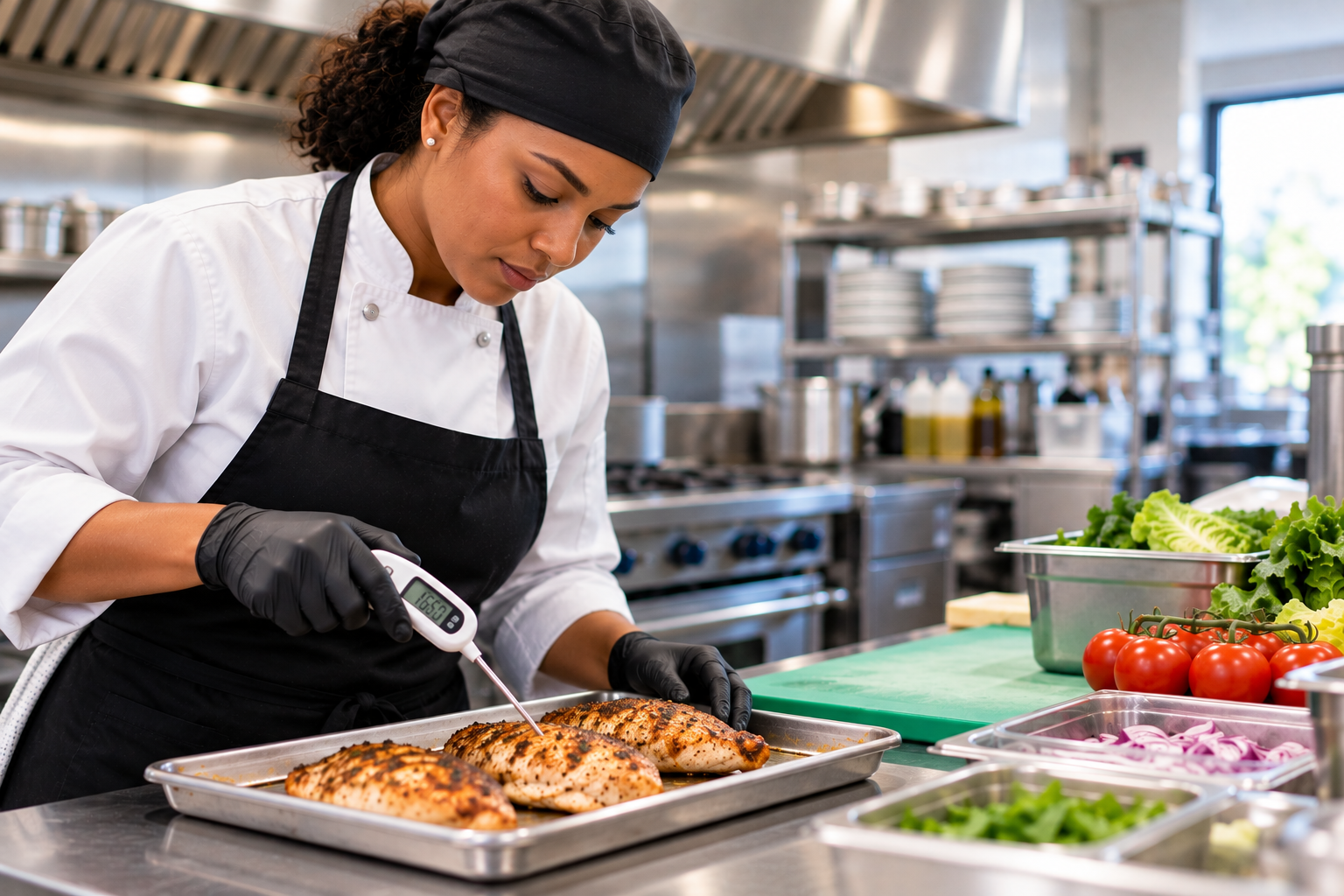
Use a calibrated food thermometer to verify that food reaches the required internal temperature.
For example, poultry should reach an internal temperature of 165°F (74°C).
Other foods have different temperature requirements based on the type of food and applicable food safety regulations.
Never rely on appearance or color alone to determine whether food is fully cooked.
2. Prevent Cross-Contamination
Salmonella can spread when bacteria from contaminated food transfer to other foods, equipment, or surfaces.
To reduce the risk:
- Keep raw poultry, meat, and seafood separate from ready-to-eat foods.
- Use separate cutting boards and utensils when appropriate.
- Clean and sanitize food-contact surfaces between tasks.
- Store raw animal products properly to prevent drips onto other foods.
Preventing cross-contamination is especially important when handling foods that will not receive additional cooking.
3. Practice Proper Handwashing
Employees can spread harmful bacteria when they fail to wash their hands correctly.
Food handlers should wash their hands with soap and running water for at least 20 seconds, including after handling raw animal products, using the restroom, or touching contaminated surfaces.
Gloves do not replace proper handwashing.
4. Follow Safe Receiving and Storage Procedures
Salmonella prevention begins before food reaches the preparation area.
Purchase ingredients from approved, reputable suppliers and inspect deliveries for signs of damage, contamination, or improper temperature control.
Keep refrigerated foods at 41°F (5°C) or below, as required by the FDA Food Code, and follow proper storage procedures.
Remember that refrigeration helps control bacterial growth but does not reliably eliminate Salmonella.
5. Clean and Sanitize Food-Contact Surfaces
Regular cleaning and sanitizing help prevent bacteria from spreading throughout the kitchen.
Pay particular attention to cutting boards, knives, preparation tables, utensils, and equipment that contact raw animal products.
Always follow the manufacturer’s instructions for food-contact sanitizers, including proper concentration and contact time.
6. Train Employees on Food Safety
Food safety procedures are only effective when employees understand and consistently follow them.
Managers should provide training on safe food handling, cooking temperatures, cross-contamination prevention, personal hygiene, and cleaning and sanitizing.
Regular reminders and supervision help reinforce these practices during daily operations.
Why Salmonella Prevention Matters
A Salmonella outbreak can have serious consequences for a restaurant, including customer illness, health department investigations, lost business, and damage to its reputation.
Prevention requires consistent attention to food safety at every stage, from receiving ingredients to serving customers.
A well-trained team is one of your restaurant’s most important defenses against foodborne illness.
Strengthen Your Restaurant’s Food Safety Practices
Protecting customers starts with knowledgeable managers and employees who understand how to handle food safely.
TSC Associates offers ServSafe Food Manager Certification and Food Handler training to help foodservice professionals build essential food safety knowledge.
Whether you’re training new employees or preparing managers for certification, investing in food safety education helps create a safer environment for your customers and team.
Ready to strengthen your food safety program?
Explore TSC Associates’ food safety training options and find the right course for you or your employees.
Frequently Asked Questions
Can Salmonella survive refrigeration?
Yes. Refrigeration slows bacterial growth but does not reliably kill Salmonella. Proper cooking and safe food handling remain essential.
What temperature kills Salmonella in poultry?
Poultry should reach a minimum internal temperature of 165°F (74°C), measured with a food thermometer.
How does Salmonella spread in restaurants?
Salmonella can spread through contaminated ingredients, undercooked food, improper handwashing, and cross-contamination between raw and ready-to-eat foods.