The way food moves through the supply chain is becoming more traceable.
The FDA Food Traceability Rule establishes additional recordkeeping requirements for certain foods to help investigators identify and remove potentially contaminated products from the market faster during a foodborne illness outbreak or other food safety event.
The original compliance date was January 20, 2026. The FDA proposed extending the compliance date to July 20, 2028, and Congress subsequently directed the FDA not to enforce the rule before July 20, 2028.
For restaurants and foodservice businesses covered by the rule, the additional time provides an opportunity to understand the requirements and prepare.
What Is the FDA Food Traceability Rule?
The Food Traceability Rule is part of Section 204 of the FDA Food Safety Modernization Act, commonly known as FSMA 204.
It focuses on foods included on the FDA’s Food Traceability List, or FTL. Businesses that manufacture, process, pack, or hold these foods may need to maintain additional records as the food moves through the supply chain.
Restaurants are covered by the rule unless an exemption applies.
The goal is simple: if a food safety problem occurs, better records can help investigators trace affected products more quickly.
Which Foods Are Included?
The FDA Food Traceability List includes foods commonly used in restaurants and other foodservice operations.
Examples include:
- Fresh tomatoes
- Fresh leafy greens
- Fresh cucumbers
- Fresh peppers
- Fresh herbs
- Fresh-cut fruits and vegetables
- Shell eggs
- Nut butters
- Certain cheeses
- Certain seafood and shellfish
- Refrigerated ready-to-eat deli salads
The requirements can also apply to foods containing an ingredient on the Food Traceability List if that ingredient remains in the same form in which it appears on the list.
What Does the Rule Mean for Restaurants?
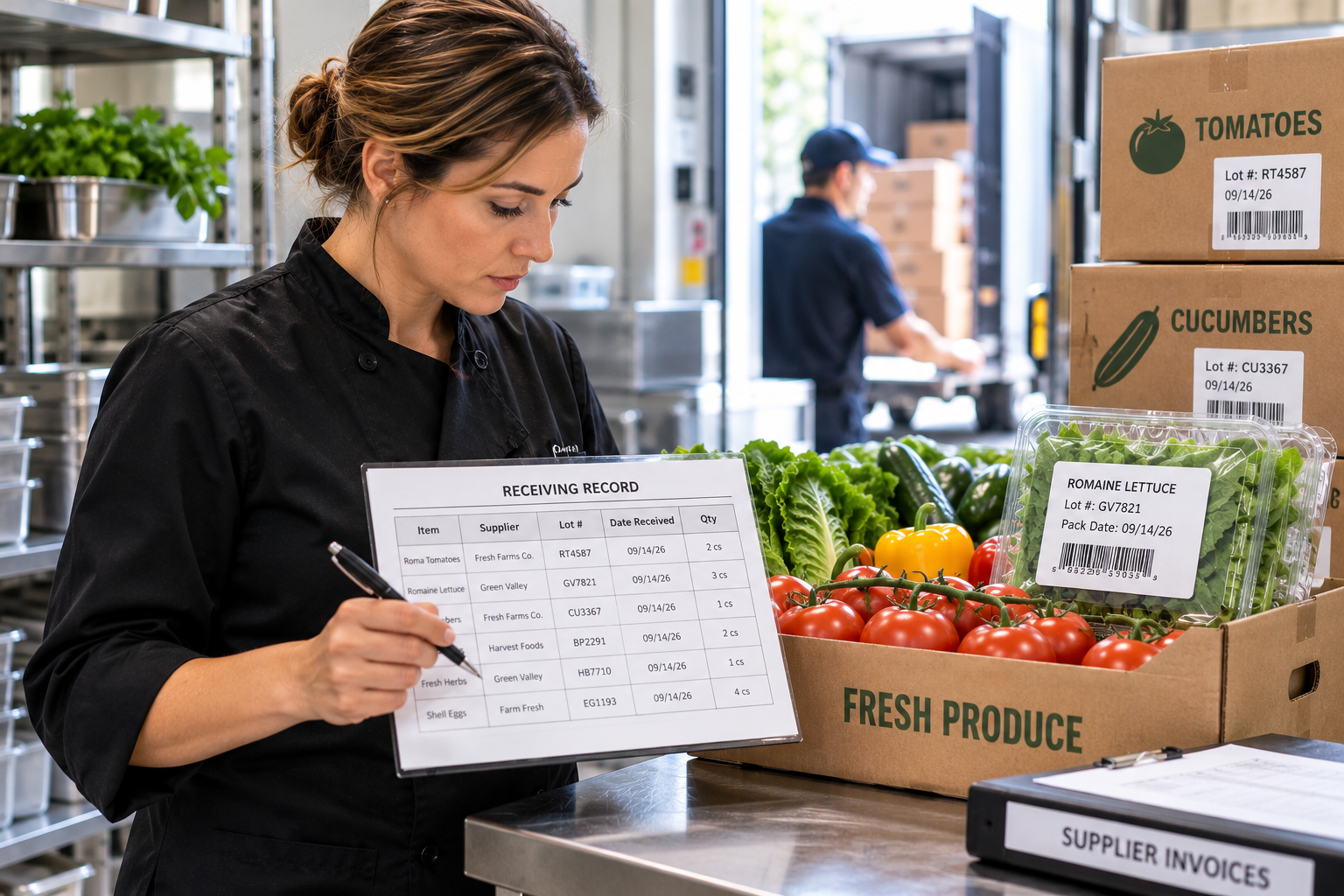
For many restaurants covered by the rule, receiving records will be especially important.
FDA explains that restaurants generally must maintain required receiving information for foods on the Food Traceability List. However, restaurants generally do not have to track those foods into individual recipes or maintain additional transformation records when the prepared food is sold directly to consumers.
For example, if a restaurant receives fresh tomatoes covered by the rule and uses them in salads and sandwiches sold directly to customers, the restaurant may need the required receiving records for those tomatoes. It generally does not need to connect the tomatoes’ traceability information to every salad or sandwich sold.
Certain restaurants are exempt. For example, the rule provides an exemption based on the average annual monetary value of food sold or provided during the previous three years, with the threshold adjusted for inflation. Other exemptions may also apply.
What Information Needs to Be Tracked?
The rule uses two important terms:
Critical Tracking Events, or CTEs, are specific points in a food’s movement through the supply chain, such as shipping, receiving, and transformation.
Key Data Elements, or KDEs, are pieces of information that must be recorded for applicable tracking events.
For restaurants, much of the required receiving information may come directly from suppliers through invoices, packing lists, case labels, bills of lading, barcodes, or other records.
FDA does not require businesses to use one specific technology to maintain these records.
Why Food Traceability Matters
Imagine receiving an alert that a particular lot of fresh tomatoes may be contaminated with Salmonella.
Could your manager quickly determine whether your restaurant received the affected product?
Accurate traceability records can make it easier to identify recalled products and follow proper food recall procedures before affected food is served.
This is why traceability is more than a recordkeeping issue. It is another part of a strong food safety system.
Why Was the Deadline Moved to 2028?
The original compliance date was January 20, 2026.
The FDA proposed extending that date by 30 months to July 20, 2028, to give businesses additional time to coordinate traceability systems across the food supply chain.
Congress later directed the FDA not to enforce the Food Traceability Rule before July 20, 2028. The FDA has stated that it intends to comply with that directive.
FDA has continued working with restaurants, retailers, farms, distributors, and other regulated businesses in 2026 to address implementation challenges and potential flexibility related to lot-level tracking.
How Can Restaurants Prepare?
Restaurants do not need to wait until 2028 to review their procedures.
Now is a good time to:
- Review the FDA Food Traceability List.
- Determine whether an exemption applies to your operation.
- Identify covered foods your restaurant regularly receives.
- Talk with suppliers about how traceability information will be provided.
- Review your receiving and recordkeeping procedures.
- Make sure records can be located quickly when needed.
- Determine who will oversee traceability requirements at your establishment.
- Train managers and employees on proper receiving and food safety procedures.
Food Safety Training Is Part of the Bigger Picture
Food traceability is one part of protecting your customers.
Restaurants also need employees who understand safe receiving, proper storage, cross-contamination prevention, time and temperature control, cleaning and sanitizing, allergen safety, and other essential food safety practices.
TSC Associates provides Food Manager and Food Handler training to help foodservice professionals build the knowledge they need to maintain safe, compliant operations.
As food safety requirements continue to evolve, make sure your team has the knowledge to keep up.
Explore TSC Associates food safety training options and find the right training for you or your team.
Frequently Asked Questions
When will the FDA Food Traceability Rule be enforced?
Congress has directed the FDA not to enforce the Food Traceability Rule before July 20, 2028. FDA has stated that it intends to comply with that directive.
Does the Food Traceability Rule apply to all restaurants?
No. Restaurants are covered unless an exemption applies. FDA provides exemptions for certain smaller restaurants and other specific situations.
Do restaurants have to track ingredients to individual meals?
Generally, no. FDA says restaurants that prepare food and sell it directly to consumers generally do not need to link traceability information for covered ingredients to individual recipes or meals. Covered restaurants still need to maintain applicable receiving records.