
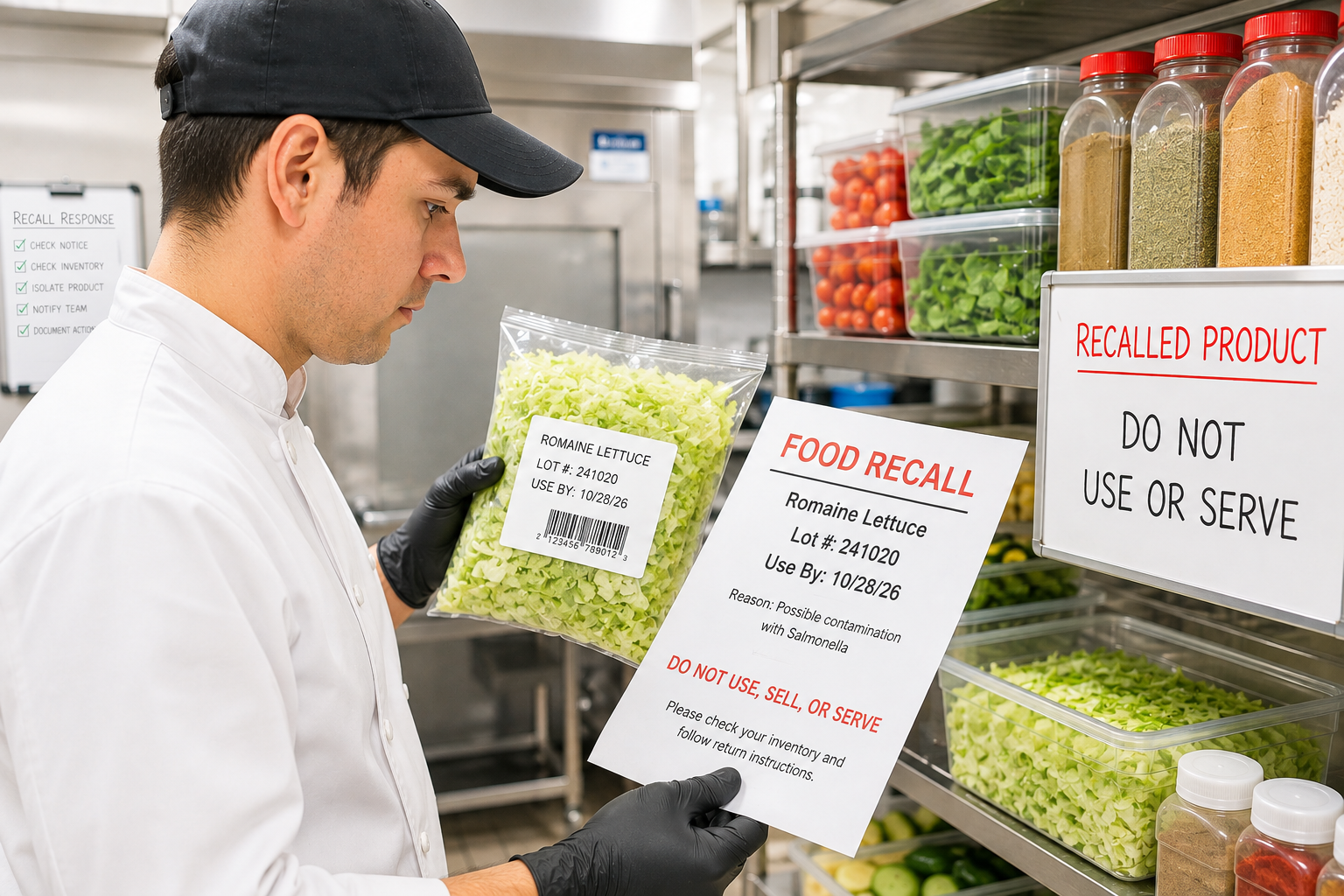
A food recall can happen without warning. A supplier may notify you about contaminated produce, an undeclared allergen, or a product linked to a foodborne illness outbreak.
When that happens, your restaurant needs to act quickly.
Having clear food recall procedures helps your team identify affected products, prevent them from being served, and protect your customers.
Why Food Recalls Happen
Food may be recalled for several reasons, including:
• Bacterial contamination, such as Salmonella, E. coli, or Listeria
• Undeclared food allergens
• Foreign materials, such as metal, glass, or plastic
• Labeling problems
• Other conditions that could make a food unsafe
The FDA oversees recalls for most foods, while USDA’s Food Safety and Inspection Service handles recalls involving meat, poultry, and processed egg products.
What Should a Restaurant Do During a Food Recall?
1. Review the Recall Notice
Read the complete recall notice and determine exactly which products are affected.
Check identifying information such as:
• Product and brand name
• Package size
• Lot or batch number
• UPC
• Sell-by, use-by, or best-by date
Do not assume every package of a particular product is affected. A recall may apply only to specific lots or production dates.
2. Check Your Inventory
Search all areas where the product could be stored, including coolers, freezers, dry storage, prep stations, and off-site storage.
Review invoices and receiving records to determine whether your restaurant received the affected product.
3. Stop Using and Isolate the Product
Immediately stop using, selling, or serving recalled food.
Move the product away from normal inventory and clearly label it:
“RECALLED PRODUCT. DO NOT USE OR SERVE.”
Also identify any menu items that may contain the recalled ingredient.
4. Follow the Recall Instructions
Follow the specific instructions from the manufacturer, supplier, FDA, USDA, or other responsible authority.
You may need to return the product, dispose of it, or hold it for pickup.
Never donate or give recalled food to employees. Do not assume cooking will make a recalled product safe.
5. Clean and Sanitize When Necessary
Consider whether the recalled food contacted other foods, utensils, equipment, storage containers, or food-contact surfaces.
If contamination may have occurred, follow appropriate cleaning and sanitizing procedures.
6. Document Your Response
Keep a record of what happened, including:
• Product information
• Supplier
• Quantity affected
• Date the recall notice was received
• Actions taken
• Date the product was returned or discarded
Good records can also help your restaurant determine quickly whether it received a recalled product in the first place.
Communication Is Critical
A recall response can fail when only one manager knows about it.
Make sure affected employees know which product has been recalled, how to identify it, which menu items may be affected, and what to do if they find additional product.
If your business has multiple locations, confirm that every location received the recall information and completed the necessary actions.
Create a Food Recall Plan Before You Need It
Your restaurant should establish a simple recall procedure before an incident occurs.
Decide who will monitor recall notifications, check inventory, isolate affected products, contact suppliers, communicate with employees, document the response, and verify that the recall has been completed.
Current recalls continue to demonstrate why preparation matters. Food safety alerts and recalls can involve common restaurant ingredients and hazards ranging from Salmonella and E. coli to undeclared allergens.
Quick Restaurant Food Recall Checklist
When you receive a food recall notice:
• Read the complete notice.
• Check product names, lot numbers, dates, and other identifiers.
• Search your inventory and receiving records.
• Stop using or serving affected products.
• Isolate and label recalled food.
• Notify employees and other locations.
• Follow official return or disposal instructions.
• Clean and sanitize affected areas when necessary.
• Document your actions.
• Verify that the recalled product is no longer in use.
Prepare Your Team Before a Recall Happens
A written procedure is only effective when your team knows how to follow it.
Food safety training helps managers and employees understand safe receiving, storage, cross-contamination prevention, allergen safety, cleaning, sanitizing, and other practices that become especially important during a recall.
TSC Associates provides Food Manager, Food Handler, and Allergen training to help foodservice professionals strengthen their food safety knowledge and protect their customers.
Don’t wait for a recall to discover gaps in your food safety program.
Visit TSC Associates to explore food safety training and certification options for you and your team.
Frequently Asked Questions
Where can restaurants check for food recalls?
Check the FDA’s Recalls, Market Withdrawals, and Safety Alerts resources for FDA-regulated foods and USDA FSIS recall resources for meat, poultry, and processed egg products.
Should recalled food be thrown away immediately?
Not always. Isolate the food and follow the instructions in the recall notice. The product may need to be returned, discarded, or held for pickup.
Can a restaurant serve a recalled product after cooking it?
Do not use or serve a recalled product unless the official recall instructions specifically authorize a corrective action.